September 21 2022 ·
A Global Festival For Indic Stories
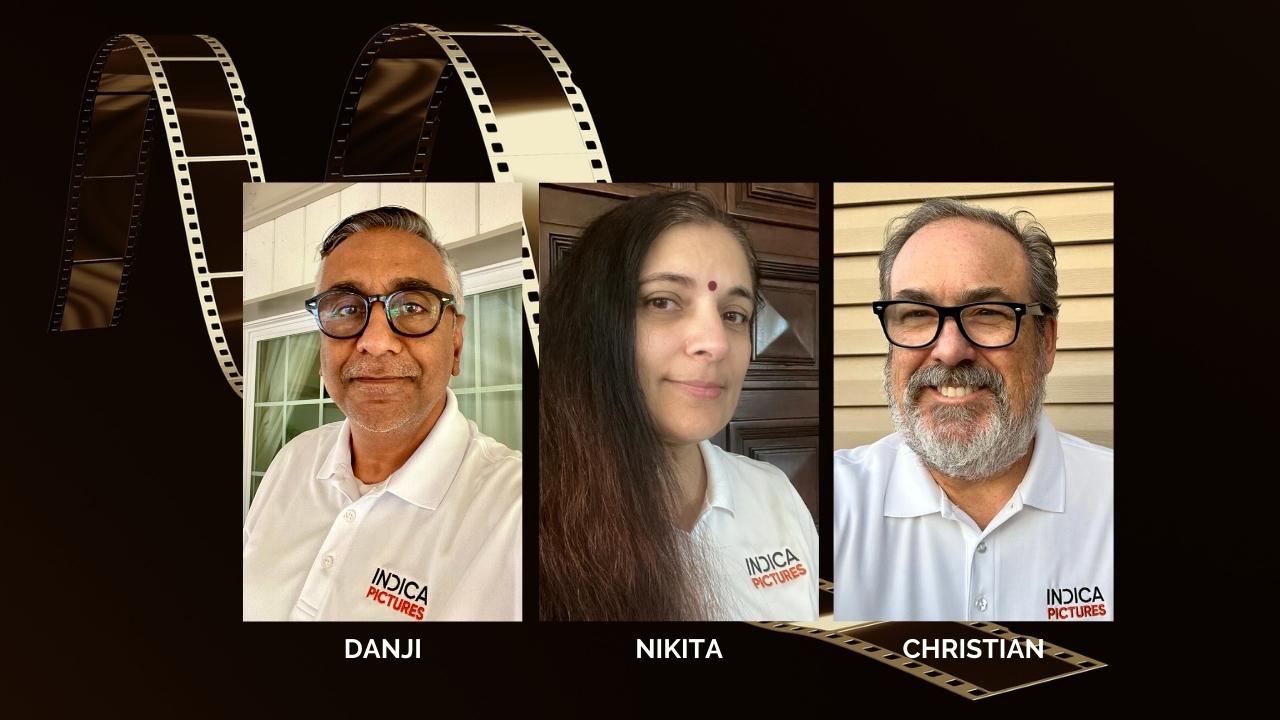
As Indic Film Utsav prepared for its third edition in November 2022, the festival had established a distinctive model: a global, 24/7 online film festival dedicated exclusively to Indic content, with an emphasis on positive storytelling and family viewing. In this interview, Festival Director Danji Thotapalli, Head of Programming Nikita Hattangady and Head of Filmmaker Liaison Christian Frost discuss the festival’s growth, its response from filmmakers and audiences, and its plans for the future.
A Global Festival for Indic Stories
How has the journey been in terms of concept, screenings and audience response?
Danji Thotapalli: The idea emerged from recognising that the audience for Indic content extends across India and around the world. A festival confined to one city would not serve that audience adequately. We therefore chose to build a global, 24/7 online OTT festival focused exclusively on Indic content with positive messaging and family viewing.
The first two editions were encouraging. The previous year alone recorded around 43,000 unique views. Our secure, DRM-enabled platform helped protect filmmakers’ work, and we did not encounter a single instance of piracy. We also offer prize money to winning filmmakers. Several participants have returned with new submissions, and some have gone on to serve as jury members. We are pleased with what the festival has achieved in a relatively short time.
What has been the response in submissions and viewership?
Danji Thotapalli: Film festivals often take several years to establish themselves, and many do not survive beyond four or five years. Being part of INDICA, with its commitment to Indic culture and knowledge traditions, has been a significant advantage.
Across our first two editions, we received close to 1,300 submissions and programmed 140 films. Our global reach brought approximately 43,000 unique views in the previous year, alongside encouraging feedback from audiences and filmmakers.
There are challenges, of course. The pandemic affected film production, and much of the available content was produced before it. Some films had already been released in theatres or on other platforms and were therefore ineligible. We also wanted to find films that went beyond the political or darker narratives that often dominate the available selection.
The Changing Landscape of Short Films
With films such as The Kashmir Files, RRR and Rocketry: The Nambi Effect shaping conversations about Indian cinema in 2022, could these trends influence short filmmaking?
Nikita Hattangady: Short films have a character of their own. Filmmakers often explore subjects that affect them personally, particularly because short films offer limited commercial returns. Their primary concern is frequently to tell a meaningful story rather than to predict what audiences will like. However, social trends do influence the subjects filmmakers choose, as do the kinds of stories that major film festivals favour.
Making Film Festivals Accessible to Filmmakers
How does Indic Film Utsav accommodate filmmakers who may be unfamiliar with the festival circuit?
Christian Frost: Our festival provides a platform for filmmakers whose work may not otherwise find an audience. We try to keep the submission process and communication straightforward, with as few barriers as possible.
Filmmakers are central to the festival, and we want them to share their experiences with other creators. Regardless of whether a film is selected, our aim is to ensure that every filmmaker feels welcomed and respected throughout the process. We want them to remember Indic Film Utsav as a community that treated them and their work with care.
Celebrating Positive Cinema
Could the festival contribute to the celebrations of 75 years of India’s Independence by highlighting positive films centred on India?
Nikita Hattangady: Absolutely. It is important for India’s next phase to include greater positivity in the media. We need to recognise the country’s strengths and encourage people to move in constructive directions. This does not mean ignoring weaknesses, but with so much negative storytelling already in circulation, we want to create space for inspirational and uplifting films.
Plans for Theatrical Screenings and Film Incubation
Does the festival plan to introduce physical screenings and commission films in the coming years?
Danji Thotapalli: We certainly hope to organise Opening and Closing Night events in person. Interaction between audiences and filmmakers is an important part of the festival experience. Our ambition is to hold these events in different parts of the world—for instance, an Opening Night in Singapore and a Closing Night in Dallas one year, followed by events in London and Los Angeles the next.
We are also developing an incubation project to identify promising filmmakers and support them through the filmmaking process, from the initial idea to production.
What to Expect in 2022
How many films were you planning to programme for the third edition?
Nikita Hattangady: We expected to programme around 50 films, broadly in line with the previous edition. The final number would depend on the variety and quality of the selection. We had some excellent films to share with audiences that year.
Creating Conversations Around Cinema
Would you consider discussions on the films, themes and talent featured at the festival, including through INDICA’s social media platforms?
Christian Frost: The festival has attracted a passionate group of storytellers, each bringing distinctive experiences to their work. We see an opportunity to build on this by introducing panel discussions and one-to-one conversations.
These sessions could explore filmmakers’ backgrounds, inspirations, creative challenges and funding experiences. Sharing such insights would offer audiences a deeper understanding of the filmmaking process and encourage emerging filmmakers to learn from those who have already navigated it.
Measuring Success
How do you measure the success of a film festival?
Nikita Hattangady: If audiences enjoy the films, learn something from them, and come away feeling inspired and uplifted by the selection, then the festival has succeeded.
The Future of Short Films on OTT Platforms
Short documentary and narrative films from India remain difficult to find on mainstream OTT platforms. Is this likely to change?
Nikita Hattangady: Short films have limited commercial value on most streaming platforms, which is one reason they remain difficult to find, whether they are documentaries or narrative works. However, I believe their value will grow as more people watch content at home and look for quality entertainment that fits into a busy schedule. A short film can offer a complete and meaningful experience without requiring a substantial investment of time.
As Indic Film Utsav prepared for its third edition, its central ambition remained clear: to connect independent filmmakers with a global audience and create space for stories that are inspirational, culturally grounded and accessible to families.
To learn more about the team, visit Center for Indic Films.